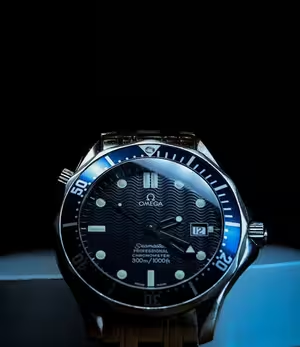
Top Luxury Watch Brands: Rolex vs Omega vs Patek Philippe
A human buyer’s guide to heritage, craftsmanship, resale value, and choosing the right luxury watch in 2026.
April, 2026
Introduction
Luxury watches remain powerful because they do something phones cannot do. They carry history on the wrist. A Rolex Submariner, Omega Speedmaster, or Patek Philippe Nautilus is not only a way to tell time. It is a signal of taste, craftsmanship, patience, and sometimes achievement. In a world where technology becomes outdated quickly, mechanical watches feel almost rebellious. They are slow, deliberate, and built to last.
For U.S. buyers comparing Rolex vs Omega vs Patek Philippe, the decision should begin with purpose. Are you buying a watch to wear every day, mark a milestone, collect, pass down, or potentially preserve value? The answer changes the best choice. Rolex is the easiest to recognize and often the most liquid. Omega offers serious heritage and engineering at a relatively more accessible price. Patek Philippe sits at the top of traditional prestige, with scarcity and finishing that appeal to collectors.
This guide compares heritage, craftsmanship, resale value, popular models, and buying strategy. Luxury watches can hold value, but they should not be treated as guaranteed investments. Buy the watch you would enjoy wearing first. If it also retains value, that is a bonus.
The Luxury Watch Market in 2026
The luxury watch market USA in 2026 is calmer than the speculative boom of 2021 and 2022. That is healthy. During the hype period, some buyers treated watches like fast flips. Prices rose too quickly, waitlists became status symbols, and social media made every steel sports watch look like a financial opportunity. The market has since become more selective. Collectors still value the right references, but ordinary models no longer rise simply because they are luxury watches.
Demand remains strong for Swiss watches, investment watches, and collectible timepieces with real scarcity. Brand equity matters. Condition matters. Original box and papers matter. Service history matters. So does patience. A watch that is easy to buy at a discount from an authorized dealer will usually not trade above retail tomorrow.
The key 2026 lesson is that value retention is uneven. Some Rolex sports models remain highly liquid. Patek Philippe's rare pieces can command premiums but may have a smaller buyer pool. Omega is respected and wearable, but many models are more likely to depreciate from retail before stabilizing. That does not make Omega bad. It means the buyer should separate enjoyment from investment claims.
Rolex: Icon of Prestige
Rolex watches USA shoppers often start with three names: Submariner, Daytona, and Datejust. The Submariner is the classic dive watch that works with a T-shirt or a blazer. The Daytona is tied to motorsport and has long been one of the most desired chronographs in the world. The Datejust is less hype-driven but perhaps the purest everyday Rolex because it fits so many wrists and situations.
Rolex retains value because of recognition, durability, controlled distribution, and deep resale liquidity. A buyer in nearly any major U.S. city can find dealers who understand Rolex pricing. That liquidity makes Rolex feel safer than many brands. It does not mean every Rolex appreciates. Precious-metal dressier models, diamond configurations, or less popular references may trade below retail.
The strength of Rolex is confidence. The designs change slowly, the watches are robust, and the brand is understood globally. The weakness is access and hype. Popular steel sports models may be difficult to buy at retail without purchase history. Secondary market premiums can turn a good watch into a questionable value. A smart buyer should avoid paying a hype price just because the crown is on the dial.
Omega: Precision and Innovation
Omega offers one of the strongest value stories in Swiss watchmaking. The Speedmaster Professional, known as the Moonwatch, has space history and a design that has aged beautifully. The Seamaster connects to diving, sport, and James Bond culture. The Constellation offers a dressier identity. Omega also invests heavily in movement technology, anti-magnetism, and modern manufacturing.
Omega vs Rolex is often framed as prestige versus value, but that is too simple. Omega is not a consolation prize. It is a serious watchmaker with historic achievements. The difference is market behavior. Omega is generally easier to buy, often available through authorized dealers, and frequently more accessible in price. That accessibility usually means resale premiums are less common than with Rolex.
For buyers who want a watch to wear, Omega can be excellent. A Speedmaster or Seamaster may provide heritage, build quality, and daily usability without the same pressure or attention as Rolex. For pure investment, Omega requires more selectivity. Limited editions, vintage pieces, and iconic references may do better than standard models.
Patek Philippe: The Pinnacle of Craftsmanship
Patek Philippe pricing USA reflects a different world. Patek is not simply selling a watch. It is selling hand-finishing, heritage, scarcity, complicated movements, and a family-owned tradition that collectors respect deeply. The Nautilus is the famous sports model, the Calatrava is the classic dress watch, and Grand Complications represent the brand's highest technical identity.
Patek commands premium pricing because production is limited and demand among serious collectors is global. The brand also has a strong auction history. Rare references can become cultural objects, not just accessories. When a Patek is desirable, complete, and well preserved, it can hold or increase value impressively.
The weakness is accessibility and liquidity. Many Patek watches cost far more than Rolex or Omega, and the buyer pool is smaller. Selling an expensive Patek quickly may require the right dealer, auction house, or collector. Patek is best for buyers who appreciate craft and can afford to be patient. It should not be bought only because someone online said it is an investment.
Rolex vs Omega vs Patek Philippe: Head-to-Head Comparison
| Brand | Popular models | Typical positioning | Resale profile | Best buyer |
|---|---|---|---|---|
| Rolex | Submariner, Daytona, Datejust | Prestige, durability, everyday luxury | Often strong, especially steel sports models | Buyer who wants recognition and liquidity |
| Omega | Speedmaster, Seamaster, Constellation | Innovation, heritage, relative accessibility | Mixed; iconic models hold better than ordinary references | Buyer who wants history and value without maximum hype |
| Patek Philippe | Nautilus, Calatrava, Grand Complications | Exclusivity, hand craftsmanship, collector prestige | Can be excellent for scarce references, but less liquid | Collector focused on craft, rarity, and long-term ownership |
Investment Value of Luxury Watches
Luxury watch investment USA discussions need honesty. Watches do not pay dividends. They require insurance, careful storage, servicing, authentication, and transaction costs. Dealer spreads can be wide. Auction fees can be meaningful. A watch can look profitable on paper and still produce a smaller net return after costs.
The best value retention usually comes from a mix of brand strength, scarcity, condition, and demand. Rolex steel sports models often have the broadest liquidity. Patek Philippe can offer higher collector upside in the right references. Omega can be a smart buy when purchased at the right price, especially iconic or vintage models. But most watches should be considered passion assets, not retirement plans.
If investment matters, buy complete sets with box and papers, avoid over-polished cases, keep service records, and be careful with aftermarket modifications. Originality matters. A factory configuration is usually safer than custom diamonds or altered dials. The more collectible the watch, the more details matter.
Buying Guide for U.S. Investors
Authenticity is the first rule. Buy from authorized dealers, respected pre-owned specialists, established auction houses, or platforms with strong authentication and return policies. Counterfeits have become more sophisticated. So have watches assembled from mixed parts. A low price from an unknown seller is not a bargain if the watch is wrong.
Second, understand availability. Authorized dealers may have waitlists for popular Rolex and Patek models. Building a relationship can help, but buyers should avoid buying unwanted pieces just to chase access unless they understand the cost. The secondary market offers immediate availability, but usually at market price.
Third, try the watch on. Photos do not reveal thickness, bracelet comfort, dial legibility, or how a case sits on the wrist. A watch that looks perfect online may feel wrong in person. Since luxury watches are emotional purchases, comfort matters as much as resale charts.
FAQs
1. Which luxury watch brand holds value best?
Rolex and Patek Philippe generally have stronger value retention than most brands, especially desirable sports models and rare references. Omega can hold value well in select models but usually requires more careful buying.
2. Is Rolex better than Omega?
Rolex is stronger for brand recognition and resale liquidity. Omega can offer excellent engineering, heritage, and value. Better depends on whether the buyer prioritizes prestige, accessibility, or personal taste.
3. Why are Patek Philippe watches so expensive?
Patek Philippe watches are expensive because of limited production, hand-finishing, complicated movements, brand history, and strong collector demand.
4. Are luxury watches good investments?
Some watches hold or increase value, but they are not guaranteed investments. They have transaction costs, maintenance needs, and market risk. Buy for enjoyment first.
5. Where can I buy authentic luxury watches in the USA?
Authorized dealers, reputable pre-owned dealers, established auction houses, and trusted online platforms with authentication policies are the safest options.
Conclusion
Rolex, Omega, and Patek Philippe each represent a different kind of luxury. Rolex offers prestige, durability, and resale liquidity. Omega offers innovation, history, and accessibility. Patek Philippe offers exclusivity, craft, and collector seriousness.
Choose based on budget, lifestyle, and investment goals, but do not let resale value be the only voice in the room. The best watch is one you will wear, understand, and enjoy. If it also preserves value over time, that makes the ownership experience even sweeter.
Additional Practical Notes
How to Evaluate Condition and Authenticity
Condition can change a luxury watch's value dramatically. A lightly worn watch with original case lines, matching bracelet, clean dial, and complete box and papers is usually more desirable than a polished example with missing history. Polishing is not always bad, but aggressive polishing can soften edges and reduce collector appeal. For vintage watches, originality can matter more than perfection.
Authentication should be handled before money changes hands. A reputable dealer should stand behind the watch in writing. For private sales, a buyer should request inspection by a qualified watchmaker or brand service center where possible. Serial numbers, movement condition, dial originality, bracelet stretch, service parts, and water resistance all matter.
Box and papers are not everything, but they help. They support provenance and can make resale easier. Service records also matter because luxury watch maintenance is not cheap. A bargain watch that needs a major service may not be a bargain after all.
Daily Wear vs Collection Piece
A daily watch should be comfortable, durable, and emotionally easy to wear. Many Rolex models excel here because they are robust and recognizable. Omega also shines as a daily choice because a Seamaster or Speedmaster can feel special without being too precious. Patek Philippe can be worn daily by the right owner, but many references feel more formal, delicate, or financially significant.
A collection piece is different. It may be rare, complicated, discontinued, or historically important. It may spend more time in a safe than on the wrist. That is not wrong, but buyers should be honest with themselves. If you want joy every morning, buy wearability. If you want long-term collecting interest, focus on rarity, condition, and provenance.
The best collections often mix both. One watch can be the daily companion. Another can mark formal occasions. A third can be the serious collector piece. Buying slowly usually leads to better choices than trying to build a collection in one year.
Avoiding Common Luxury Watch Mistakes
The first mistake is buying the hype instead of the watch. If you only want a model because it trades above retail, you may lose interest when the market cools. Trends change. Personal taste lasts longer.
The second mistake is ignoring size. A watch that is too large, too thick, or too heavy may sit unused no matter how famous it is. Case diameter tells only part of the story. Lug-to-lug length, bracelet fit, thickness, and wrist shape matter.
The third mistake is treating every limited edition as collectible. Limited production only helps when demand is real. A watch can be rare and still unwanted. Focus on enduring design, brand strength, and genuine collector interest rather than marketing language.
More Buying and Strategy Guidance
Servicing, Insurance, and Long-Term Ownership Costs
Luxury watches have carrying costs. Mechanical watches need periodic service, and service prices vary by brand, movement, and complication. A simple time-only watch is usually less expensive to maintain than a chronograph, annual calendar, perpetual calendar, or grand complication. Before buying, ask what a typical service costs and how long it may take.
Insurance is also worth considering. A watch worth several thousand dollars may not be fully covered under a standard homeowners policy. Specialized jewelry or watch coverage can protect against theft, loss, or damage, but the owner may need appraisals, photos, serial numbers, and secure storage.
Storage matters too. Watches should be kept away from moisture, magnetism, and careless handling. A safe can protect value, but watches also deserve to be worn. The best ownership style balances enjoyment with care.
New vs Pre-Owned Buying Strategy
Buying new from an authorized dealer gives the cleanest experience: full warranty, known provenance, and peace of mind. The challenge is availability. Popular Rolex and Patek models may not be available immediately, while many Omega models are easier to purchase new.
Buying pre-owned gives access to discontinued references, immediate availability, and sometimes better pricing. It also adds responsibility. The buyer must evaluate seller reputation, condition, service history, originality, and return rights. A trusted pre-owned dealer may cost more than a private seller, but that premium can be worth it for authentication and support.
For first-time buyers, a reputable dealer is usually safer than chasing the lowest price. As knowledge grows, private deals and auctions may become more realistic. Education reduces risk.
Choosing Your First Serious Watch
A first serious watch should fit your real life. If you dress casually and want daily durability, a Rolex Oyster Perpetual, Submariner, Omega Seamaster, or Speedmaster may make more sense than a delicate dress watch. If you wear suits often, a Datejust, Aqua Terra, Constellation, Calatrava, or elegant Patek dress reference may feel more natural.
Set a budget that includes tax, insurance, straps, servicing, and possible resale spread. Do not spend the entire budget on the watch head and then neglect ownership costs. Also try several sizes. Many buyers discover that a 38 mm or 40 mm watch feels better than the larger piece they admired online.
Most importantly, buy slowly. The research is part of the pleasure. A watch bought after months of trying, reading, and comparing usually means more than a rushed purchase driven by social media.
A Final Word on Taste
Luxury watches are personal objects before they are market objects. The best choice should make sense on your wrist, in your wardrobe, and in your budget. A collector may admire the market strength of a Nautilus but still prefer wearing a Speedmaster. A first-time buyer may dream of a Daytona but feel more comfortable with a Datejust. That honesty matters. When taste, condition, authenticity, and price all line up, the purchase is much easier to live with.
The healthiest approach is to buy with a long horizon. Trends will move, premiums will change, and new references will appear. A watch chosen for genuine enjoyment can survive those cycles better than one purchased only because the internet said it was hot.